

Overcoming The Spirit of Corruption
Welcome to Part 5, Week 33 of our virtue meditation series. Today, we are exploring how the enemy’s subtle persuasions attempt to corrupt our thoughts, quiet our conscience, and distance us from God. Through St. Hildegard of Bingen’s profound insights on corruption and the Virtue of True Worship of God, we will discover how to counter this internal decay by offering our daily lives as a pure, living spiritual sacrifice to Christ.
Opening Prayer
Jesus, help me faithfully practice true worship of God. I want to understand how small I truly am and how magnificent you are through true worship. Lord you alone are perfect, full of wisdom, all-knowing, all-powerful, and merciful. Through your deep love for us and with deep humility, you came down from heaven to accompany us and to show us the Father. You are with us always, coming down from heaven to feed us and heal us in our bodies, minds, and souls. Please let me offer you true worship in the Mass. I want to feel your presence in the sweet silence of my days and be moved to act in accordance with your quiet nudging. I want to know that you are God and humbly submit to whatever you ask of me.
Eternal Father, Help me offer my works, my daily prayers, and the love I have for my family as a spiritual sacrifice acceptable to you. Please help me be righteous. I want to please you through my spiritual sacrifices every day. I wish to offer true worship by being a living tabernacle of love that carries your Son, my Lord and Savior Jesus Christ, into the world to love and serve those in need.
Holy Spirit, you know the weakness of my mind. I hesitate, delay, and sometimes ignore your quiet nudges. I know I am called to fulfill my duties to God and the people I am entrusted to love. I ask forgiveness and fully repent for all the times I knew I was called to act and failed to do so. Please forgive me of my lack of courage, my selfishness, my spiritual disorientation, and my lack of love of God over the carnal things of this world. Holy Spirit, you are truth, and you guide me toward all righteousness. Let me be brought low so that I will be willing to go where the Lord wishes to send me, loving and trusting his providence and seeking his wisdom over my own selfish desires.
Lord, grace me with the virtue of true worship of God so that my heart is conformed to desire your will. I want to serve you today and the remaining days of my life. Let me assent to your will and be truly happy in life, trusting in your goodness and unconditional love, and knowing that you will never abandon or forsake me even in when I experience the dark night of the soul.
AMEN
The laity, dedicated as they are to Christ and anointed by the Holy Spirit, are marvelously called and prepared so that even richer fruits of the Spirit may be produced in them.
For all their works, prayers, and apostolic undertakings, family and married life, daily work, relaxation of mind and body, if they are accomplished in the Spirit—indeed even the hardships of life if patiently born—all these become spiritual sacrifices acceptable to God through Jesus Christ. In the celebration of the Eucharist these may most fittingly be offered to the Father along with the body of the Lord.
And so, worshipping everywhere by their holy actions, the laity consecrate the world itself to God, everywhere offering worship by the holiness of their lives.
Catechism, 901
What is the Virtue of True Worship of God?
In Catholic moral theology, the virtue of true worship of God—which Saint Hildegard also beautifully characterizes in her Liber Vitae Meritorum as the literal ‘True Care of God’—is the ultimate remedy for internal decay, cleansing the soul by offering our entire lives, minds, and desires as a pure spiritual sacrifice to Christ. It stands in direct opposition to the spirit of corruption, which is the progressive decay of a soul’s moral and spiritual faculties caused by harboring hidden vices and giving in to the devil’s subtle persuasions. St. Hildegard teaches that this internal rot twists our intentions and blinds the soul, turning what should be holy into empty, self-serving, and bad worship. When we actively practice true worship, we break this cycle of internal blindness, end the rot of vice, and consecrate ourselves and those we love entirely to God.
This transformation requires us to look past our own egos and acknowledge our true smallness in the presence of God’s magnificent majesty. The enemy loves to exploit our secret attachments, using quiet suggestions to lull our conscience to sleep and convince us to justify our worldly desires. True worship of God pulls us out of this trap by shifting our focus away from transactional expectations and anchoring us in authentic, selfless love for Christ. By intentionally bringing a clean heart to the sacraments and offering our daily actions as a sweet sacrifice, we reclaim our bodies as holy tabernacles where the Holy Spirit can actively burn, filling our lives with genuine righteousness and joy.
The Face Of Wrong Doing (Corruption)
Wrong Doing wears three faces at once: the head of a wolf, the tail of a lion, and a dog’s body in between. St. Hildegard explains each part—the wolf devours the soul the way a wolf devours a lamb; the lion’s tail shows a work that ends only in harshness and tyranny; the dog’s body shows a will bent wholly toward chasing after unclean things. And this fault does something the others don’t: it “forms a society” (Liber Vitae Meritorum, Part 5, Section 32, Para. 41, trans. Hozeski), binding itself to others who share the same corruption—a counterfeit unity, a false church built on shared wrongdoing—corruption— rather than shared grace. Watch the lion carry forward. Wrong Doing’s own tail is a lion’s; and the very next vice, Avarice, is given feet “like the feet of a lion… sparing nothing when it pillages” (Liber Vitae Meritorum, Part 5, Section 33, Para. 43, trans. Hozeski). The same fierce, plundering nature that ended one vice becomes the whole walking posture of the next.
How this builds the foundation for what comes next:
A soul that gives itself over to communal wrongdoing—or corruption—finds fellowship in shared sin rather than shared virtue. So this soul has already taken on the lion’s own ferocity. It only remains for that ferocity to turn from tyranny over others into outright plunder of everything it can seize.
Pray for True Care of God now.
Ask for the grace to seek real communion with God and neighbor, not the false solidarity of shared compromise. This is the last chance in the chain to be drawn back before the lion in you becomes fully avaricious.
End Corruption with the True Care of God
by St. Hildegard of Bingen
The Words of Wrong Doing
She said: “Concerning Mercury and the other systems of philosophy, I will say that they bound their elements with thorough investigation since they definitely found each and every thing that they wanted. The strongest and wisest men found these things out partially from God and partially from the wicked spirits. What did this hurt? They, therefore, called themselves such names as Mercury and philosophers because they had received a lot of wisdom and information from the sun, moon and stars. I, however, reign and rule with my deeds wherever I want, of course, in the lights of heaven, in the trees and herbs and all the green things of the earth, in the beasts and animals of the earth, and in the serpents both on the earth and in the earth. Who will resist me on my various journeys? God created all things, but I do not injure him in any way with my various actions, for he willed that he be found good in the scriptures and in the fullness of his works. So what would it benefit him if his works are so hidden that no cause might be found in them? It would accomplish nothing.”
The Response of True Care of God
I again heard a voice from the storm cloud respond to this image: “Which of the two is more pleasing to God—to adore him or his works? Creatures who come from God are not able to give life to anything. What is the life that God gives? Of course, the fact that man is rational and that the rest of the creatures exist in the elements. How? Man is alive with the wings of the power of reason, but every bird and reptile just lives and is moved about by the elements. Man speaks with his power of reason; the rest of the creatures are silent and cannot help themselves or others, but simply do their duty. You, however, o magical deed, have a circle without a hole. For when you ask many questions in the circle of a creature, this creature draws away your honor and riches, and it hurls you into hell, like a stone, since you take away from it the name of its God. Therefore, all the tribes of the earth bewail you since you blaspheme when you lead those who should serve God into error. As a result, you will receive the same rewards that the devil did.”
St. Hildegard of Bingen, Liber Vitae Meritorum (The Book of the Rewards of Life),
Part 5, Sections 6-7, Paras. 9-10 (Trans. Hozeski)
From Aimlessness to Wrong Doing: When Restlessness Finds Something to Follow
St. Hildegard shows us exactly how this soul arrived here. Aimlessness was swayed only by an idle wind, rocking her cradle without direction or purpose. By the time we reach Wrong Doing, that same wind has become something worshipped: “great roarings of the winds sounded in her ears… she rejoiced with them, as if they were her own gods” (Liber Vitae Meritorum, Part 5, Section 6, Para. 9, trans. Hozeski). A soul that never settled into a fixed purpose doesn’t stay empty for long. It starts listening for a voice loud enough to follow—any voice at all—and then it will call whatever it hears divine.
Reflection:
St. Hildegard perfectly captures the battle of the mind in this passage. Can you recognize the devil’s temptations in your own mind? Do they sound like this passage?
The Battle Inside the Tabernacle
In the words of Wrong Doing, St. Hildegard perfectly captures the exhausting, dizzying battle of the mind. When the enemy unleashes his deceptions, he fills our thoughts with false philosophies, clever justifications for hidden vices, and illusions that pull us away from the true care of God.
Our tabernacle is our heart—created by God to be a pure, honest sanctuary for His light. But when we harbor secret sins or tolerate unholy attachments, we allow corruption to compromise our soul’s temple. Often, these whispers from lying spirits are imperceptible compared to our own thoughts. If we suffer from ignorance about how to properly adore God, the enemy will gladly offer sweet temptations that comfort our ego, keeping us trapped in a state of spiritual disorientation and far away from true intimacy with Christ.
How Corruption Leads to Bad Worship
This internal decay directly derails our ability to offer authentic worship. When our minds are clouded by worldly desires, our relationship with Christ becomes entirely transactional; we might show up to prayer or true worship in the Mass out of mere habit, but internally, we are protecting our favorite vices and pushing down our conscience.
The ultimate warning of how internal corruption leads to bad worship is found in the heart of Judas Iscariot. Sitting at the very table where Jesus reclined with the Twelve, Judas allowed the deceptive rot of wrong doing to take root. He chose thirty pieces of silver, a carnal thing of this world, over true worship of God. He masked his betrayal with outward religious participation, but Jesus saw right through him. When he asked, “Surely it is not I, Rabbi?”, he showed how corruption forces the ego to pretend to be righteous while engulfted in darkness. When we refuse to let Christ cleanse our internal tabernacles, we risk walking a similar path—going through the outward motions of faith while letting our hearts drift into disobedience to God’s law.
How to Overcome the Sins of the Mind
To end corruption in our minds, we must look completely outside of our own weak human intellect. We break the devil’s persuasion by stepping away from our worldly attachments and surrendering our hearts entirely to God. In the Old Testament, the prophets emphasized the absolute necessity of turning from our sins so that the Glory of God could return to the temple. Today, we do this by intentionally bringing a clean heart to the sacraments and receiving Jesus in the Eucharist with a pure mind.
When we reject all forms of spiritual pride and offer our daily actions, struggles, and family lives as a sweet sacrifice, we reclaim our bodies as holy tabernacles. True worship cleanses the soul, silences the enemy’s whirlwinds, and allows the Holy Spirit to burn in our hearts with genuine, lasting joy.
Our Bodies Are Temples of True Worship
St. Hildegard chose the tabernacle as a symbol for our hearts because it represents the sacred space where God intends to rest. As Christians, we know that Christ came to restore our souls after humanity first joined its tabernacle to carnal things. St. Paul the Apostle reminds us of the incredible dignity—and serious responsibility—of our interior lives:
“Do you not know that your body is a temple of the Holy Spirit within you, whom you have from God, and that you are not your own? For you have been purchased at a price. Therefore, glorify God in your body” — 1 Corinthians 6:19-20
It is our ultimate duty to offer ourselves as worthy dwelling places for the Lord. Unlike Judas, who brought a corrupted, divided heart to the first Eucharist, we must intentionally prepare a clean sanctuary for Christ. This means approaching the sacraments with deep reverence and a sincere desire to let Him root out our hidden vices. When we reject spiritual pride and surrender our selfish attachments, our bodies become true tabernacles where the Holy Spirit can actively move, filling our daily lives with genuine righteousness and joy.
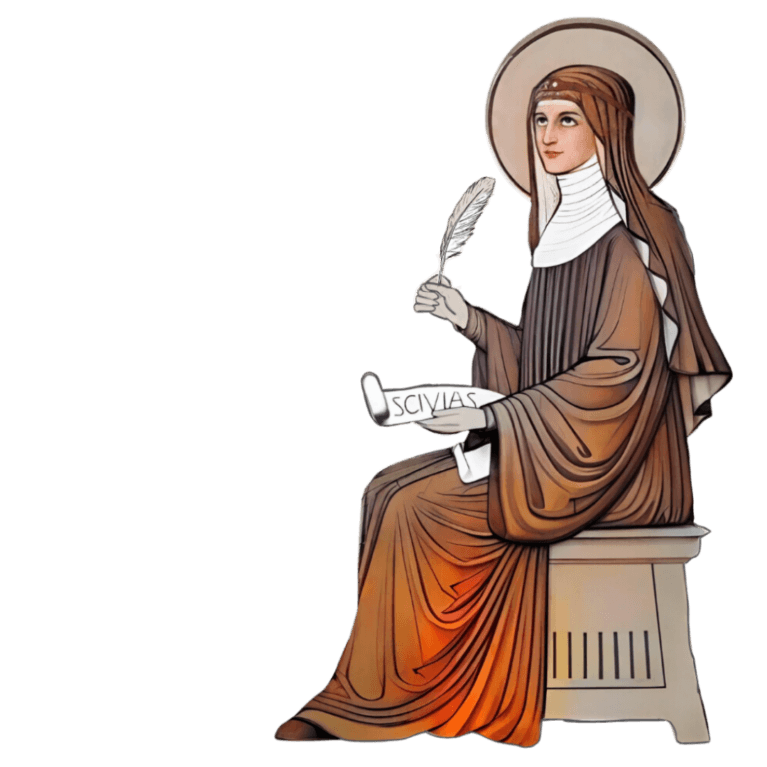
In Book 2 of Scivias, St. Hildegard ends on a high note of inspiration for true worshippers:
“True worshippers of God crush the ancient serpent… they constitute the faithful army of believers, hastening to attain their desire for Heaven by the faith of baptism and blessed virtues, which are beautiful adornments; and by their deeds they cast down the ancient seducer. They are virgins, martyrs and all other kinds of worshippers of God, who in full knowledge tread worldly things underfoot and desire the heavenly… for they are protected by God with such strength and constancy that neither the open flame nor the hidden persuasion of the Devil’s wickedness can touch them.”
Scivias, Book 2, Vision 7, Para. 25 (Trans. Hart/Bishop)
Guarding the Mind Against Futility
To prevent our hearts from drifting back into corruption like Judas did, we must actively guard our minds against the deceptive “whirlwinds” of the enemy. St. Paul warns us not to fall back into the lukewarm habits of the world around us:
“So I declare and testify in the Lord that you must no longer live as the Gentiles do, in the futility of their minds; darkened in understanding, alienated from the life of God because of their ignorance, because of their hardness of heart…” — Ephesians 4:17-18
We conquer this small-minded futility by being willing to suffer for the sake of love and emptying ourselves so that we can be filled entirely by Christ. This is the essence of divine worship: receiving Jesus worthily in the Eucharist and then going out into the world to bring His presence to others. This total surrender is exactly what the lives of the saints were all about, and it is the exact path of holiness we are called to walk this week.
Going Further: Purifying the Inner Man
If you want to dive deeper into this week’s meditation during your Holy Hour, spend some time prayerfully reading and meditating on Ephesians Chapter 4, verses 17-24.
As you read, ask the Holy Spirit to reveal any areas of “hardness of heart” or hidden compromises where you have allowed corruption to quiet your conscience. Take a few moments to journal your thoughts honestly before the Lord, and then listen in absolute silence for His healing response.
Cleansing the Corrupted Sanctuary:
Take a moment to pause, drop your defenses, and settle into the absolute stillness of this adoration chapel. Internal corruption is a progressive decay—a subtle whirlwind of persuasion where we harbor secret sins, mask our betrayals with outward religious performance, and join our tabernacle to carnal things. When our relationship with Christ becomes entirely transactional, we allow the enemy to lull our conscience to sleep. Before we open the Word of God, let us offer up a sincere prayer of petition—asking for the profound humility to end this internal blindness, reject worldly attachments, and prepare a pure sanctuary for the Lord.
Prayer for True Worship and a Pure Mind
Eternal Father, You are the magnificent Creator whose majesty fills the heavens, yet You desire to make your dwelling place within the human heart. I confess that I have often succumbed to the spirit of corruption—harboring hidden vices, chasing after the temporary, empty things of this world, and protecting my favorite sins instead of fully obeying Your law. Forgive me for the times I have offered bad worship out of mere habit, and for the moments I pridefully relied on my own weak intellect. By my own fragile power, I cannot silence the enemy’s whispers. I desperately need the cleansing fire of Your grace.
Lord Jesus, grant me the supernatural virtue of true worship of God. Send the Holy Spirit to purify my mind and shatter the illusions that keep me trapped in spiritual disorientation. When sudden temptations or clever justifications for vice flare up this week, catch my thoughts and give me a sincere, loving heart. Deliver me from a divided soul. Turn my body into a holy tabernacle, teach me to happily offer my daily life as a pure spiritual sacrifice, and grant me the grace to receive You worthily in the Eucharist so that Your presence may shine through my actions everywhere.
AMEN.
Take a slow, deep breath. Settle your mind, clear away your daily distractions, and lay down any hidden compromises you are carrying today. As you prepare to encounter Jesus in this searching passage from the Gospel of Matthew, look past the familiar text and confront the serious responsibility of your interior life.
Do not rush through these verses. Read the words slowly, stepping directly into the upper room alongside Christ and the Twelve. Watch Judas Iscariot mask his ultimate betrayal with outward religious participation, choosing thirty pieces of silver over true worship. Notice the chilling hypocrisy of his question, “Surely it is not I, Rabbi?” and how Jesus pierces right through his facade. Ask the Lord to reveal any areas of hardness of heart or secret attachments where you have compromised your conscience, and where He is calling you to surrender control to Him this week. When you are ready, pick up your pen and write His promptings directly into your prayer journal.
Judas Betrays Jesus at the Last Supper
from the Gospel of Matthew Chapter 26:14-16,20-25
Then one of the Twelve, who was called Judas Iscariot, went to the chief priests and said, “What are you willing to give me if I hand him over to you?”
They paid him thirty pieces of silver, and from that time on he looked for an opportunity to hand him over.
When it was evening, [Jesus] reclined at table with the Twelve. And while they were eating, he said, “Amen, I say to you, one of you will betray me.”
Deeply distressed at this, they began to say to him one after another, “Surely it is not I, Lord?”
He said in reply, “He who has dipped his hand into the dish with me is the one who will betray me. The Son of Man indeed goes, as it is written of him, but woe to that man by whom the Son of Man is betrayed. It would be better for that man if he had never been born.”
Then Judas, his betrayer, said in reply, “Surely it is not I, Rabbi?”
He answered, “You have said so.”
Let us Pray:
Jesus, Let me love you with a pure heart so that I can overcome the corruption in my mind and be full of virtue. Let me replace pride with humility, doubt with faith, despair with hope, and let me offer true worship to God at every Mass.
I ask all this in the name of the Father, and of the Son, and of the Holy Spirit, AMEN.
A Prayer for an Increase in Virtue for Others
Lord Jesus Christ, you say that when two or more are gathered in your name, you are with us. Jesus, in your name I lift up every person who has joined this prayer challenge or will join it in the future. I ask you to give us all the grace we need to grow in virtue and holiness so that we may love and serve you in our lives and through the people we love and care for. Help us in our thoughts, our words, and our actions. Guide us all by your Holy Spirit and give us the strength to overcome every temptation from the evil one. We ask all this in the name of the Father, and of the Son, and of the Holy Spirit, AMEN.
Together as a group we will pray for each other and strive to make good resolutions and keep them. Remember, it’s your heart that God wants to capture. Your efforts are out of love for him and a desire to imitate him as best you can in holiness.
If you fail, do not quit trying. Just take it one day at a time, and stay in the present moment with Jesus, especially in the moment you are tempted. Being virtuous is a process. No one is perfect, so just start anew every time you fail.
The Living Sanctuary: Your Week 33 Send-Off
Thank you for your dedication to Week 33. Overcoming internal corruption and choosing the true worship of God requires immense interior honesty. When you feel subtle persuasions creep back in, or catch your heart making transactional compromises with worldly things this week, do not let discouragement take root. Reclaiming your focus is a daily process of surrender, not an overnight shift. Take immediate accountability when your conscience wavers, and let the Sacrament of Reconciliation restore your peace.
True worship transforms your soul into a holy tabernacle where the Holy Spirit can actively move. You are called to actively guard your mind against futility, empty out your selfish attachments, and offer your daily actions as a pure spiritual sacrifice. To see how this personal surrender matches the ultimate source and summit of our faith, let’s look in the Catechism:
The Eucharist is “the source and summit of the Christian life.”
The other sacraments, and indeed all ecclesiastical ministries and works of the apostolate, are bound up with the Eucharist and are oriented toward it. For in the blessed Eucharist is contained the whole spiritual good of the Church, namely Christ himself, our Pasch.
The Eucharist is the efficacious sign and sublime cause of that communion in the divine life and that unity of the People of God by which the Church is kept in being. It is the culmination both of
God’s action sanctifying the world in Christ and of the worship men offer to Christ and through him to the Father in the Holy Spirit.Catechism, 1324-1325
Make a Resolution
Take a moment to reflect on the virtue of true worship of God. What are the ways you can freely practice this virtue this week? Ask the Lord to give you opportunities, and when you feel the Holy Spirit prompting you, take action. Write down your resolutions for this coming week in your prayer journal. Remind yourself to complete these resolutions daily for this entire week, and as the Spirit prompts you, feel free to write about your experiences with this virtue throughout the week.
In My Thoughts:
Jesus, this week I promise to take time daily to conform my thoughts by… (make your intention).
In My Words:
Jesus, this week I promise to take time daily to conform my words by… (make your intention).
In My Actions:
Jesus, this week I promise to take time daily to conform my actions by… (make your intention).
Pray the Litany of Virtues prayer.
Join our Virtue Meditation Prayer Challenge
Don't let spiritual overwhelm hold you back!
Let us guide you step-by-step through Saint Hildegard’s transformative path to holiness.
Receive one long-form meditation in your inbox each week—perfect for a powerful 35-minute holy hour.
