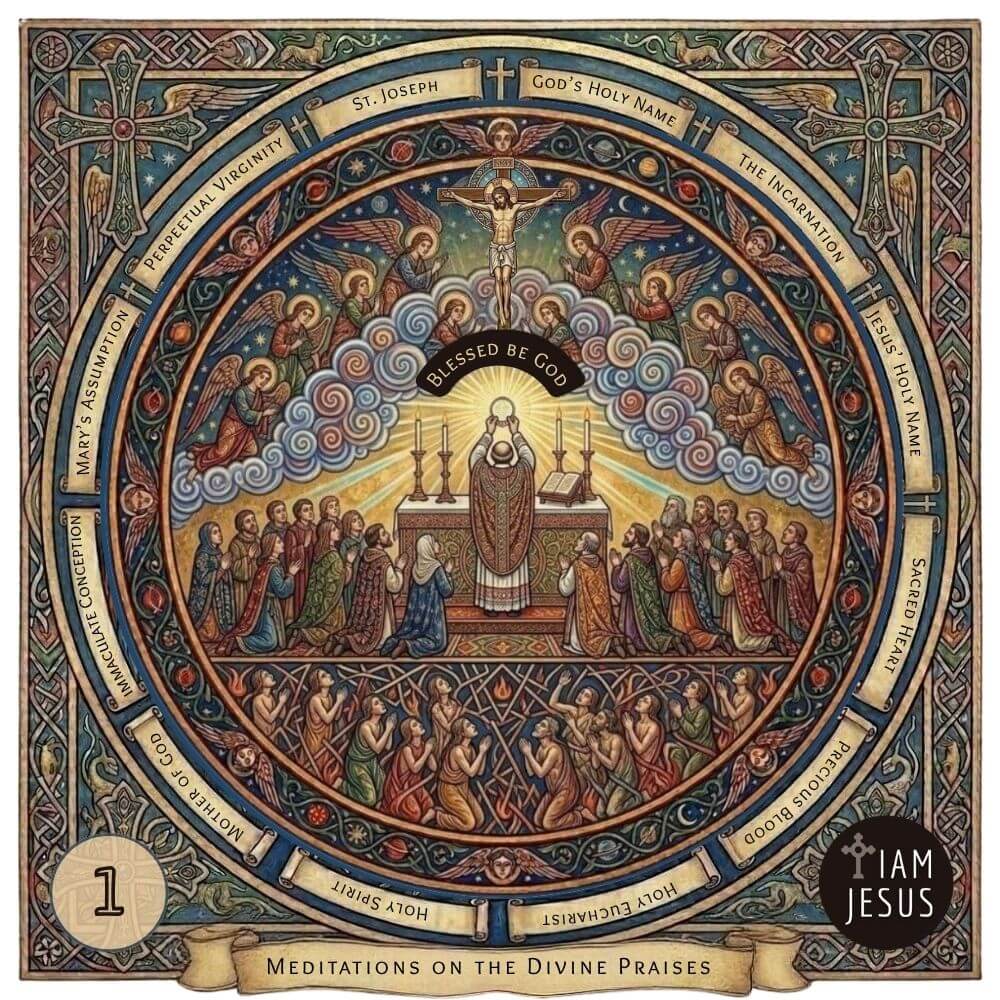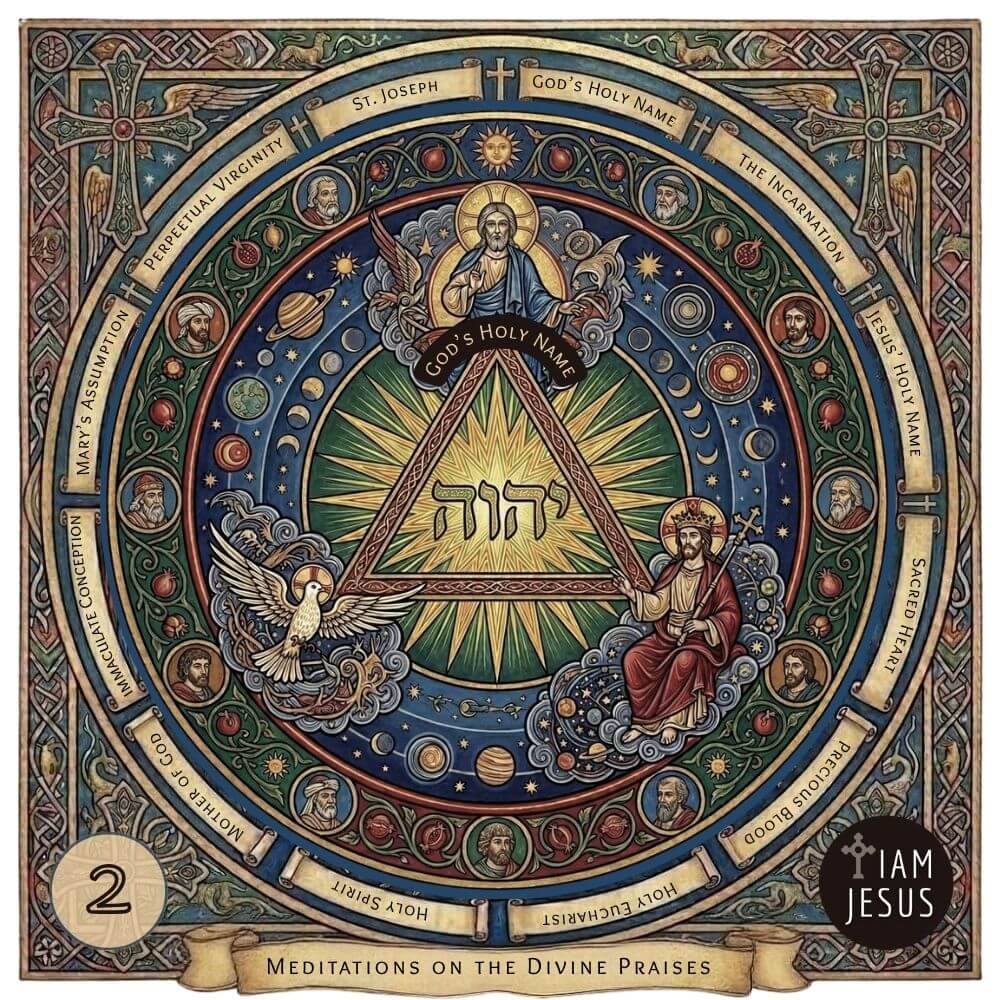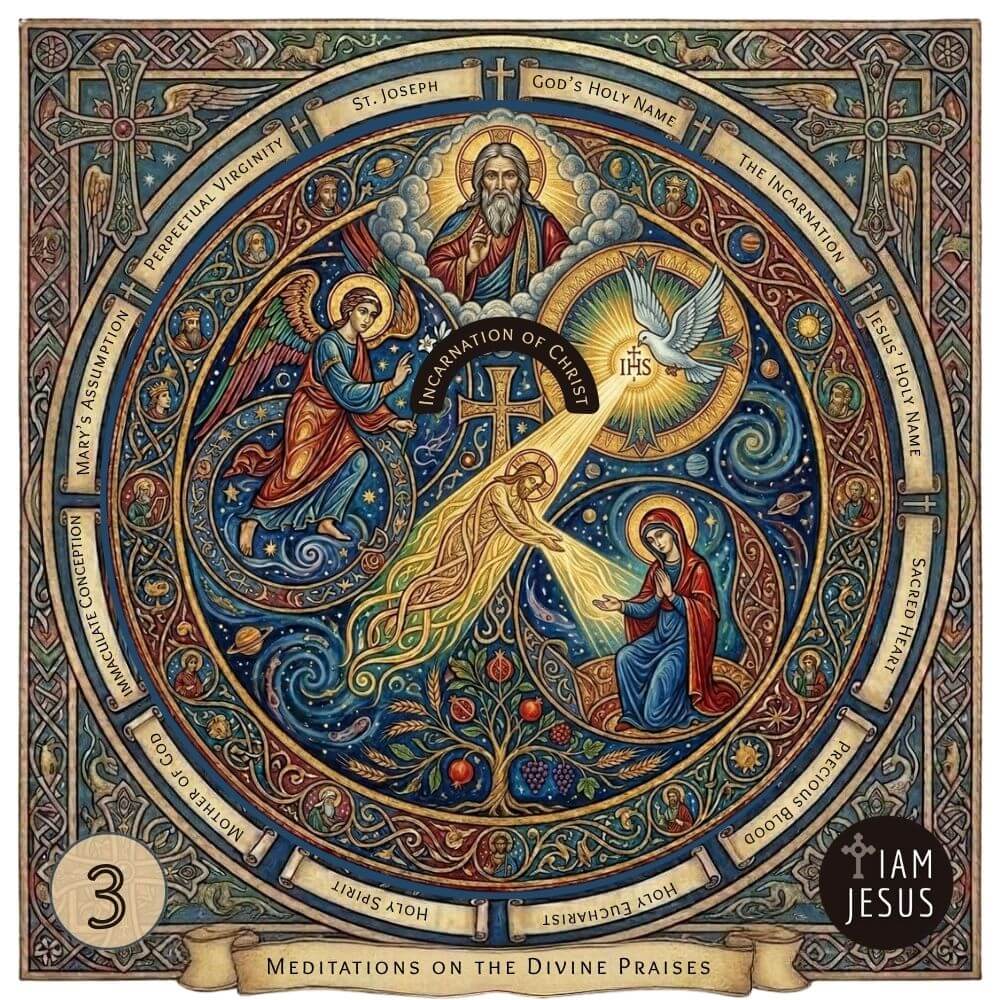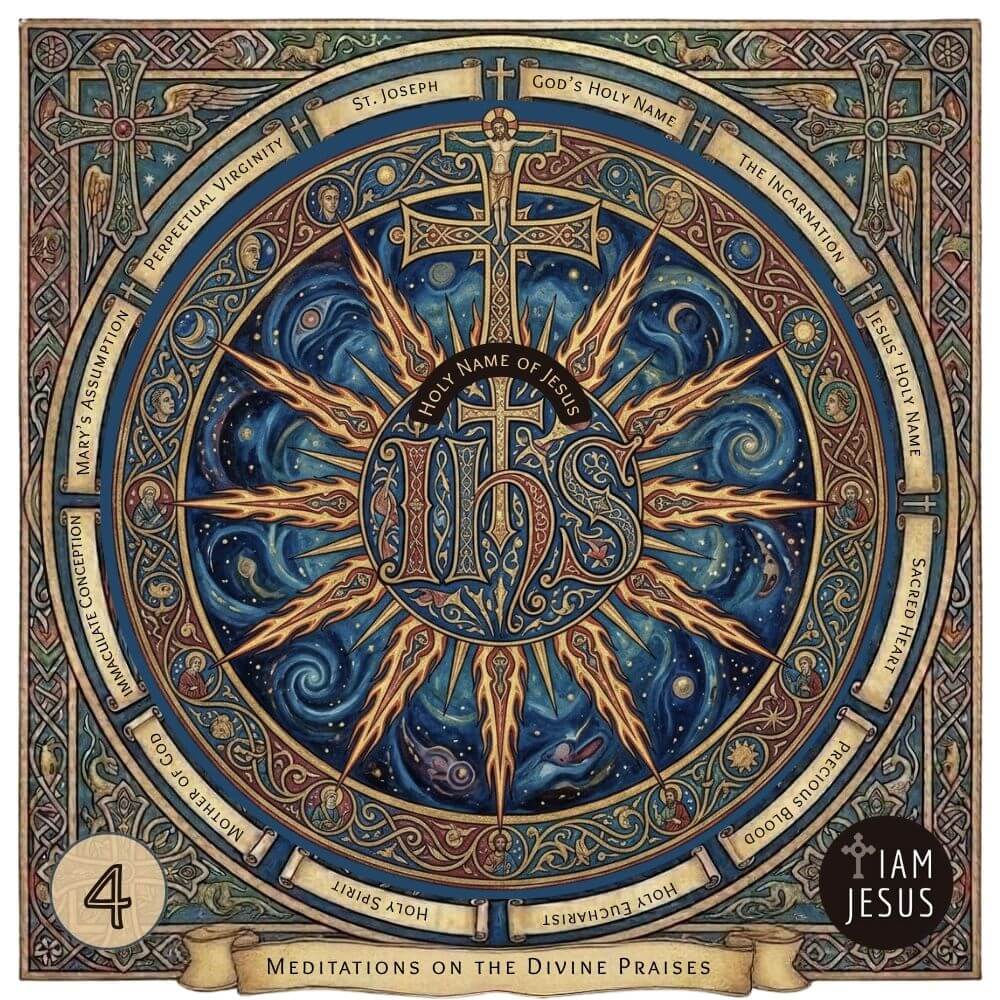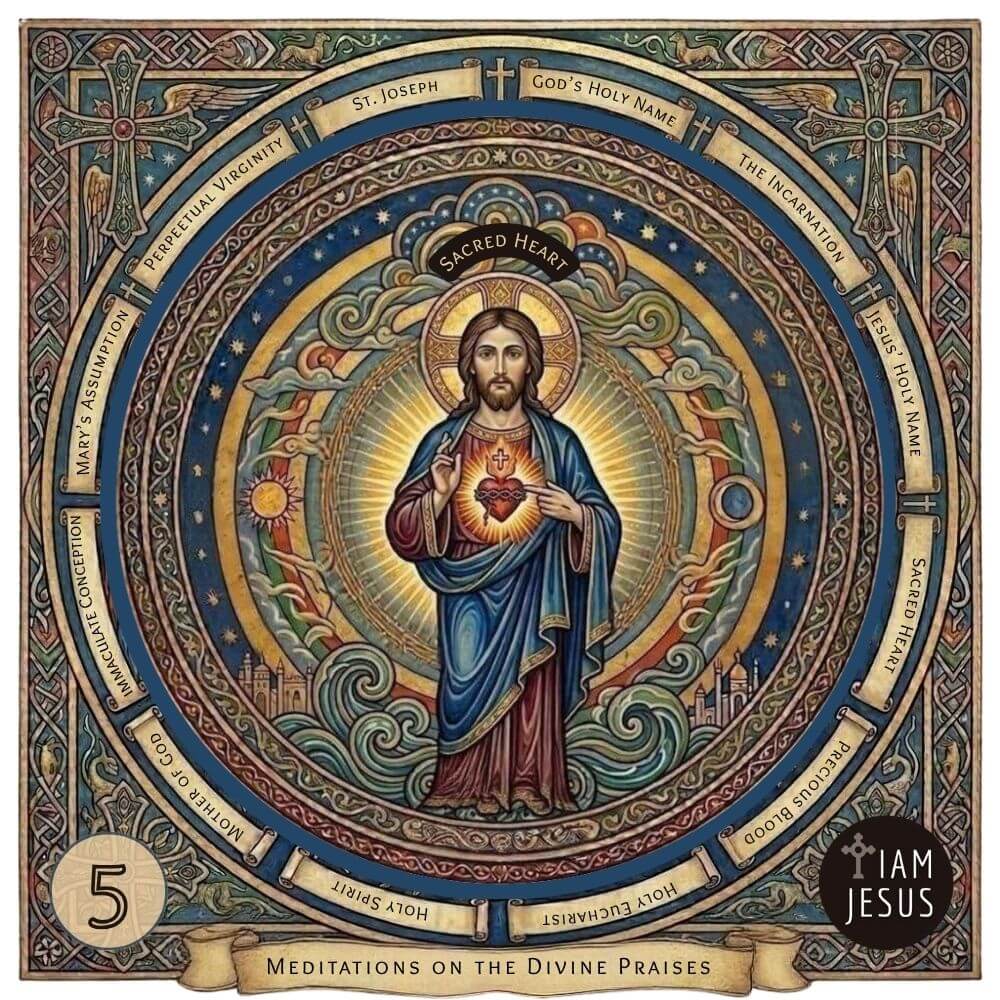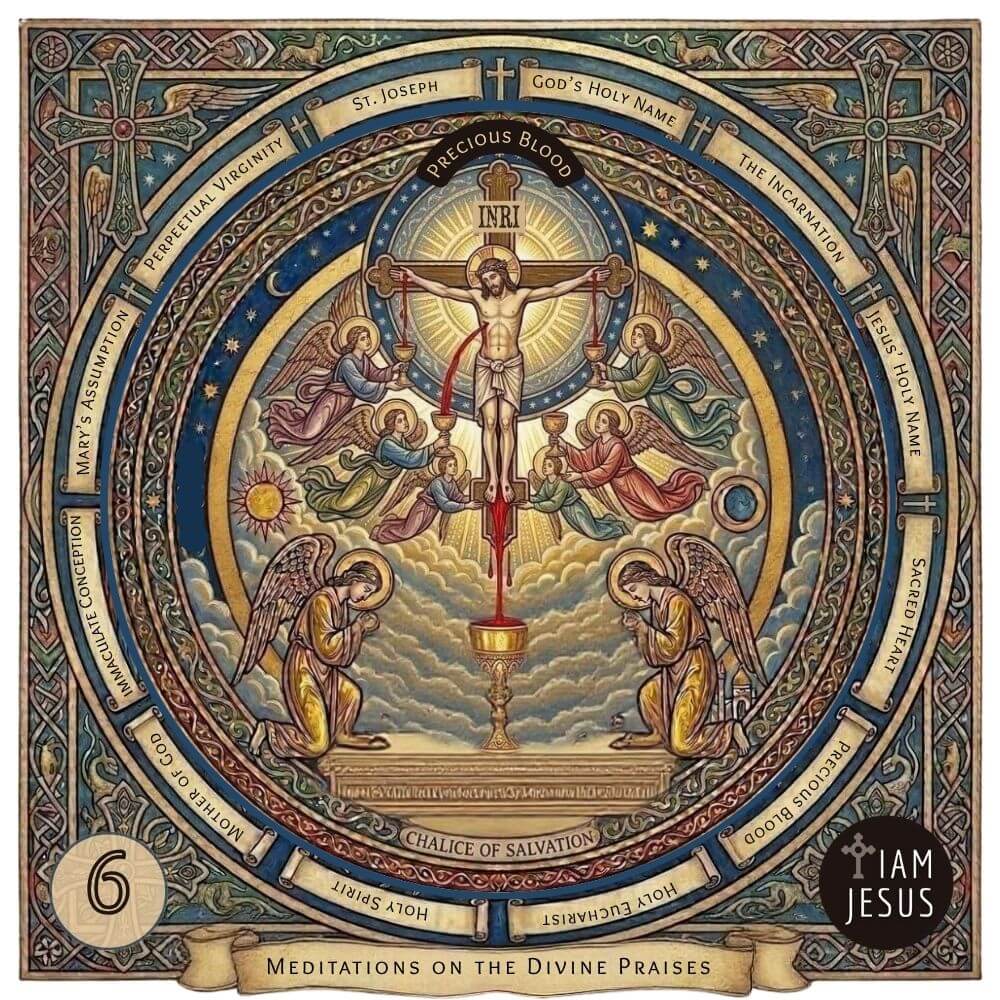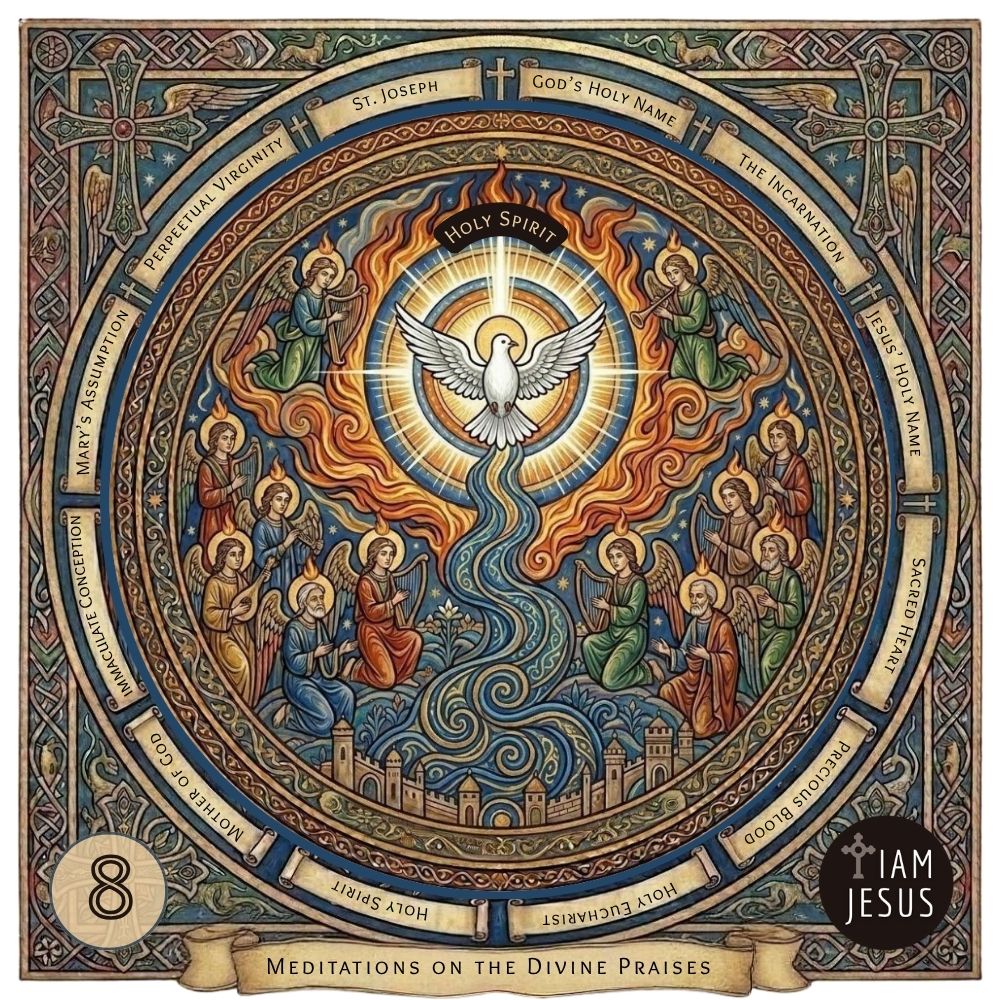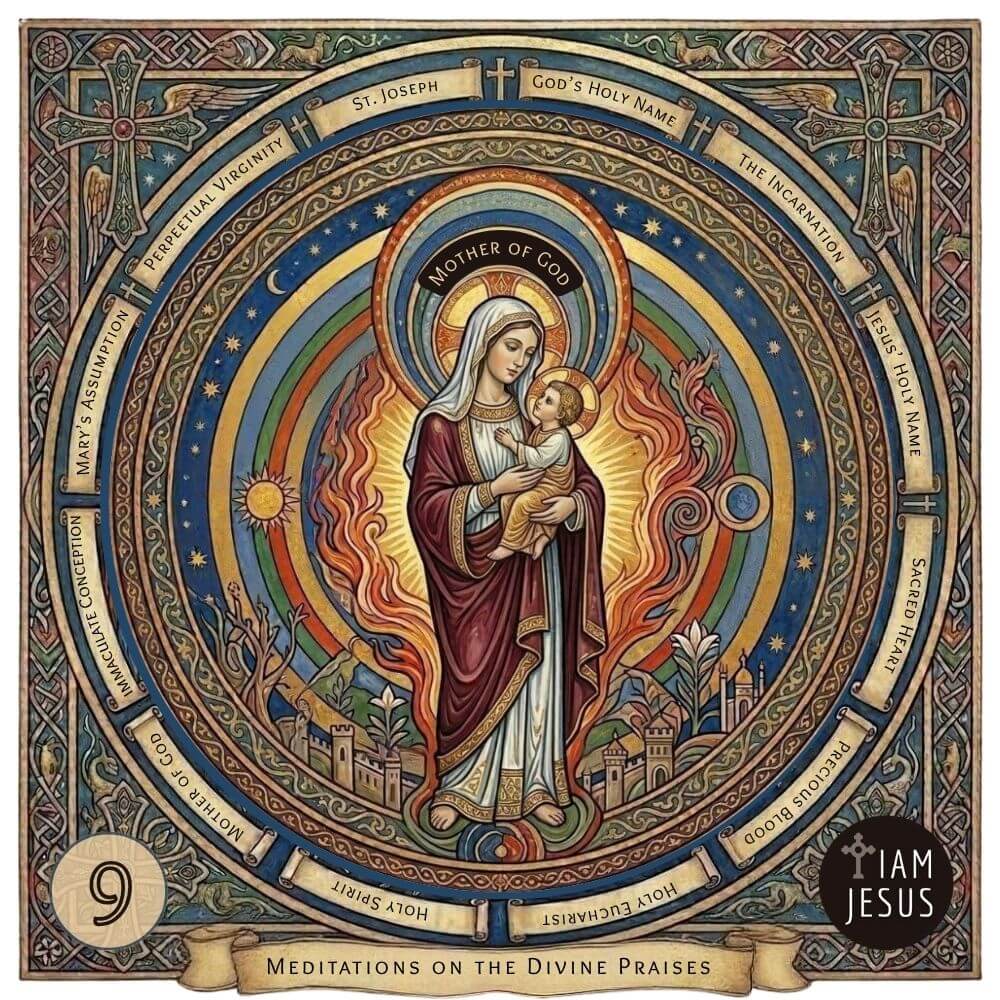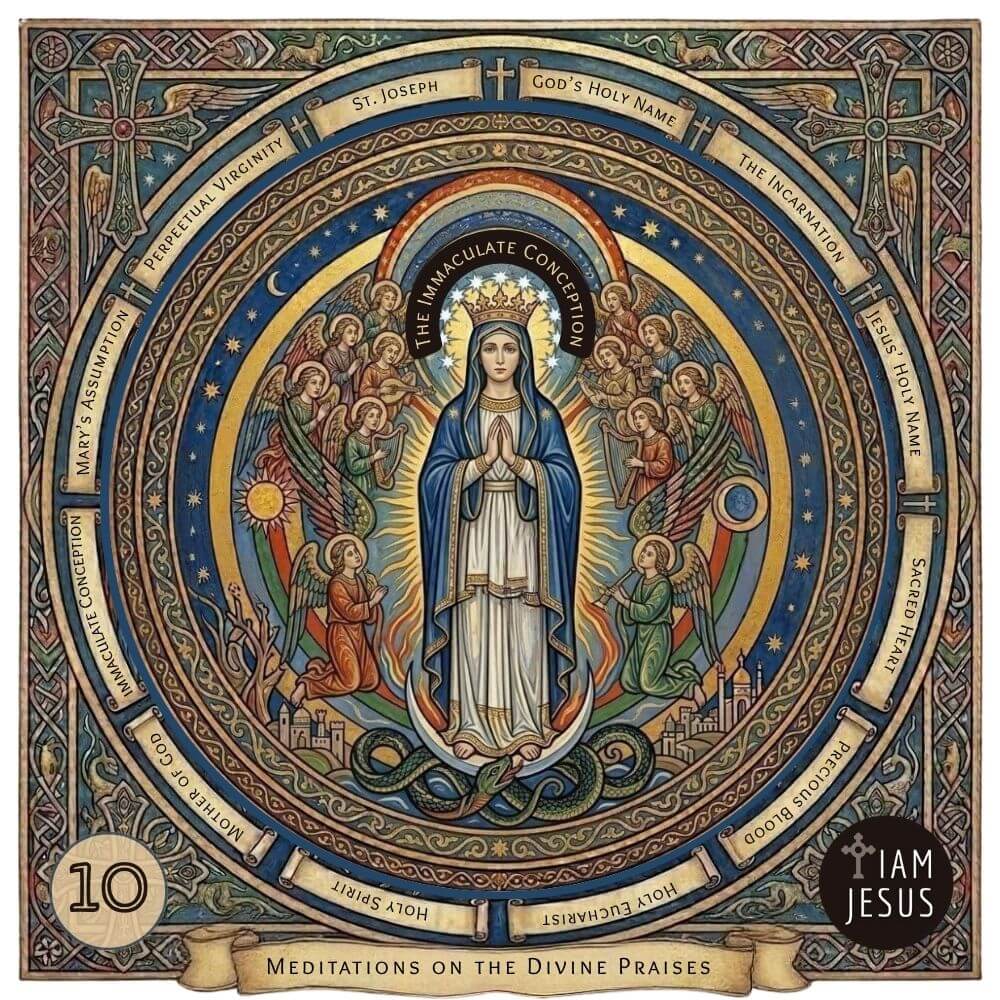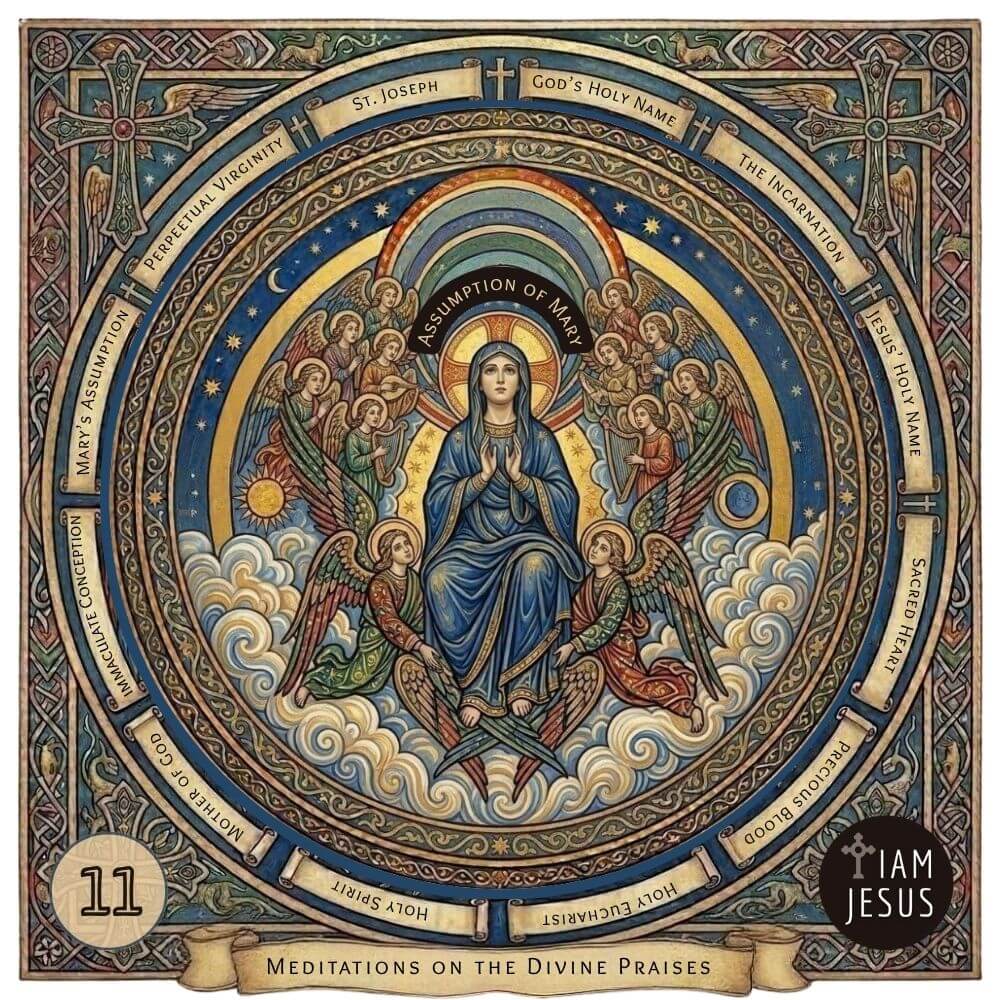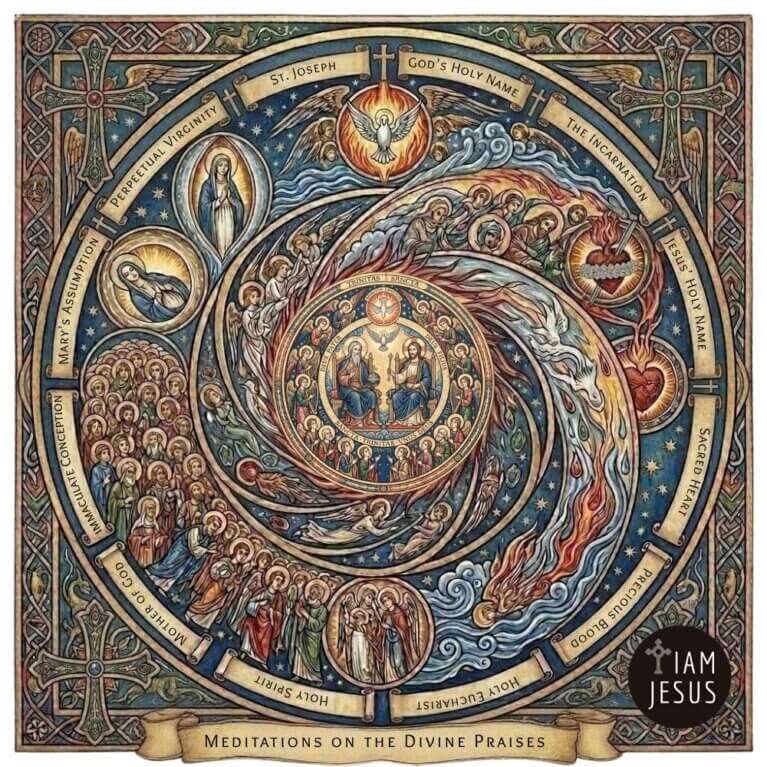
The Divine Praises prayer is a powerful act of reparation and love during Holy Hour benediction, but its profound invocations hold treasures meant to be carried in your heart every day.
We invite you to journey beyond the traditional recitation. Dive into our exclusive Divine Praises meditations—a 14-part catechetical series designed to unpack the historical meaning, theological depth, and spiritual graces hidden within each line of this beautiful prayer.
The Divine Praises is a traditional Catholic devotion traditionally recited at the conclusion of a Holy Hour Benediction, though it can also be prayed privately during Eucharistic adoration. When prayed publicly, a leader intones each invocation, which is then repeated responsively by the faithful. Ultimately, this beautiful prayer is offered to make reparation for irreverent words and blasphemies committed against God, His Divine Name, the Blessed Virgin Mary, the angels, and the saints.
History of the Divine Praises Prayer
The Divine Praises emerged from a time of profound cultural conflict. In 1797, as the secularist, anti-clerical shockwaves of the French Revolution rippled through Europe, public blasphemy and open mockery of the faith became rampant on the streets of Rome.
Deeply grieved by this spiritual darkness, Jesuit priest Fr. Luigi Felici, SJ (1736–1818) composed a short, responsive prayer originally titled Lodi in riparazione delle bestemmie (Praises in Reparation for Blasphemies). His goal was beautifully simple: to offer intentional acts of adoration to repair the wounds inflicted by public irreverence.
Recognizing its spiritual power, Pope Pius VII formally approved the devotion in 1801. Over the next two centuries, successive Popes expanded Fr. Felici’s original text to include major dogmatic milestones—such as the Immaculate Conception and the Glorious Assumption.
As local churches globally sought to standardize parish Holy Hours, this profound prayer naturally became the universal conclusion to the Solemn Benediction of the Blessed Sacrament. What began as one priest’s quiet act of reparation in 1797 ultimately blossomed into a foundational rhythm of Catholic liturgical life worldwide.
The Divine Praises in English
Blessed be God. Blessed be His Holy Name. Blessed be Jesus Christ, true God and true Man. Blessed be the Name of Jesus. Blessed be His Most Sacred Heart. Blessed be His Most Precious Blood. Blessed be Jesus in the Most Holy Sacrament of the Altar. Blessed be the Holy Spirit, the Paraclete. Blessed be the great Mother of God, Mary most Holy. Blessed be her Holy and Immaculate Conception. Blessed be her Glorious Assumption. Blessed be the Name of Mary, Virgin and Mother.
Blessed be St. Joseph, her most chaste spouse. Blessed be God in His Angels and in His Saints forever. AMEN.
The Divine Praises in Latin
Benedictus Deus. Benedictum Nomen Sanctum eius. Benedictus Iesus Christus, verus Deus et verus homo. Benedictum Nomen Iesu. Benedictum Cor eius sacratissimum. Benedictus Sanguis eius pretiosissimus. Benedictus Iesus in sanctissimo altaris Sacramento. Benedictus Sanctus Spiritus, Paraclitus. Benedicta excelsa Mater Dei, Maria sanctissima. Benedicta sancta eius et immaculata Conceptio. Benedicta eius gloriosa Assumptio. Benedictum nomen Mariae, Virginis et Matris. Benedictus sanctus Ioseph, eius castissimus Sponsus. Benedictus Deus in Angelis suis, et in Sanctis suis. AMEN.
May the heart of Jesus, in the Most Blessed Sacrament, be praised, adored, and loved with grateful affection, at every moment, in all the tabernacles of the world, even to the end of time, Amen.
Why make Reparation to God?
“In the Sacred Heart, every treasure of wisdom and knowledge is hidden. The Heart of the Lord Jesus is the starting-point of the holiness of each one of us. From the Heart of the Lord Jesus let us learn the love of God and understanding of the mystery of sin. Let us make acts of reparation to the Divine Heart for the sins committed by us and by our fellow men. Let us make reparation for rejecting God’s goodness and love. Let us draw close each day to this fount from which flow springs of living water. Let us cry out with the Samaritan woman “Give us this water”, for it wells up to eternal life.” – Saint John Paul II
Meditations on the Divine Praises
Take a deeper look at the beautiful words we pray during Eucharistic Adoration. In this series, we break down the Divine Praises line by line, offering short reflections to help you ponder the incredible mysteries of our faith and grow closer to Jesus in the Blessed Sacrament.