Welcome back to our series on the Divine Praises. In this second meditation, we turn our hearts toward a profound mystery of reverence: the holy name of God. To bless His name is to recognize His ultimate authority, His boundless mercy, and the sacred presence that sustains us. Let us pause, breathe, and enter into deeper adoration as we explore what it truly means to honor the Name above all names.
The Tetragrammaton: The Sacred and Holy Name of God
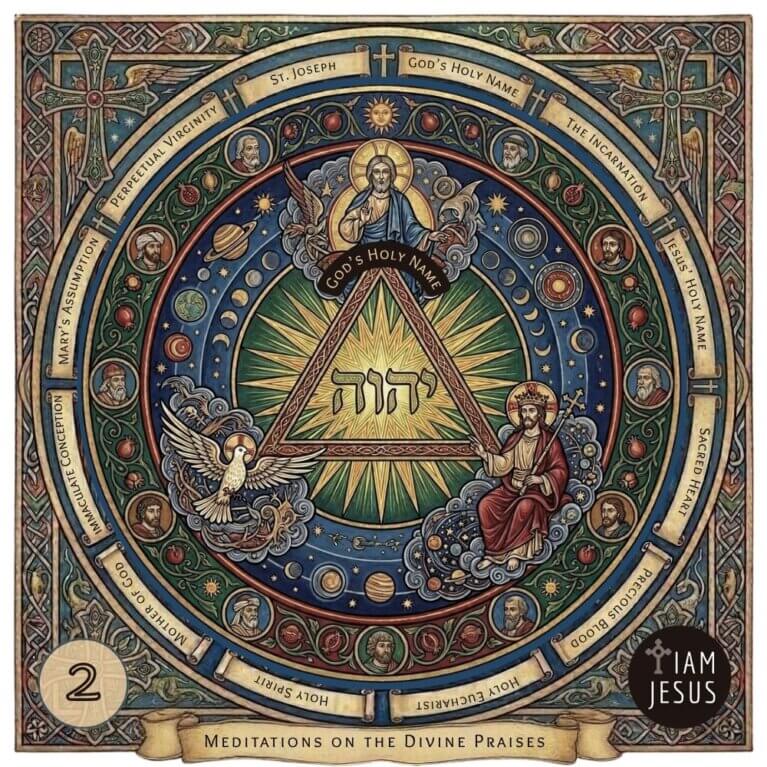
The featured image highlights the Tetragrammaton, the sacred four-letter Hebrew word יהוה (YHVH or YHWH), which represents the personal and holy name of God. Historically and biblically, this name is so revered in Jewish tradition that it is traditionally not spoken aloud, substituted instead with Adonai (or Lord) out of profound respect. Revealed to Moses at the burning bush in Exodus 3:14 as “I Am Who I Am,” this name carries immense theological weight. It denotes God’s absolute self-existence, eternal nature, and unchangeable fidelity to His covenant. When we bless His Holy Name in the Divine Praises, we are plugging into this deep, historic well of awe, honoring the timeless Creator who intimately binds Himself to His people.
“From the rising of the sun to its setting let the name of the LORD be praised. High above all nations is the LORD; above the heavens his glory. Who is like the LORD our God, enthroned on high, looking down on heaven and earth?”
Psalm 113:3-6
Pondering the Mystery of the Great "I Am"
By calling Himself “I AM,” pronounced: YAH-weh in Hebrew, God reveals that He is not just a god among many, but He is Being itself. The encounter between God and Moses at the burning bush is not merely a historical milestone; it is the foundational moment of divine self-disclosure in Salvation History.
When Moses asks for a name to bring back to the enslaved Israelites, he is asking for a guarantee of identity, authority, and presence. In the ancient world, to know someone’s name was to understand their essence. God’s response transcends all human expectations: “I AM WHO I AM” [Exodus 3:14]. Out of this profound revelation comes the Tetragrammaton, the sacred four-letter name יהוה (YAH-weh), a word so saturated with holiness that Jewish tradition left it unspoken, substituting it with Adonai, or Lord, out of profound reverence.
The revelation of the ineffable name “I AM WHO AM” contains then the truth that God alone IS. The Greek Septuagint translation of the Hebrew Scriptures, and following it the Church’s Tradition, understood the divine name in this sense: God is the fullness of Being and of every perfection, without origin and without end. All creatures receive all that they are and have from him; but he alone is his very being, and he is of himself everything that he is.
Catechism, 213
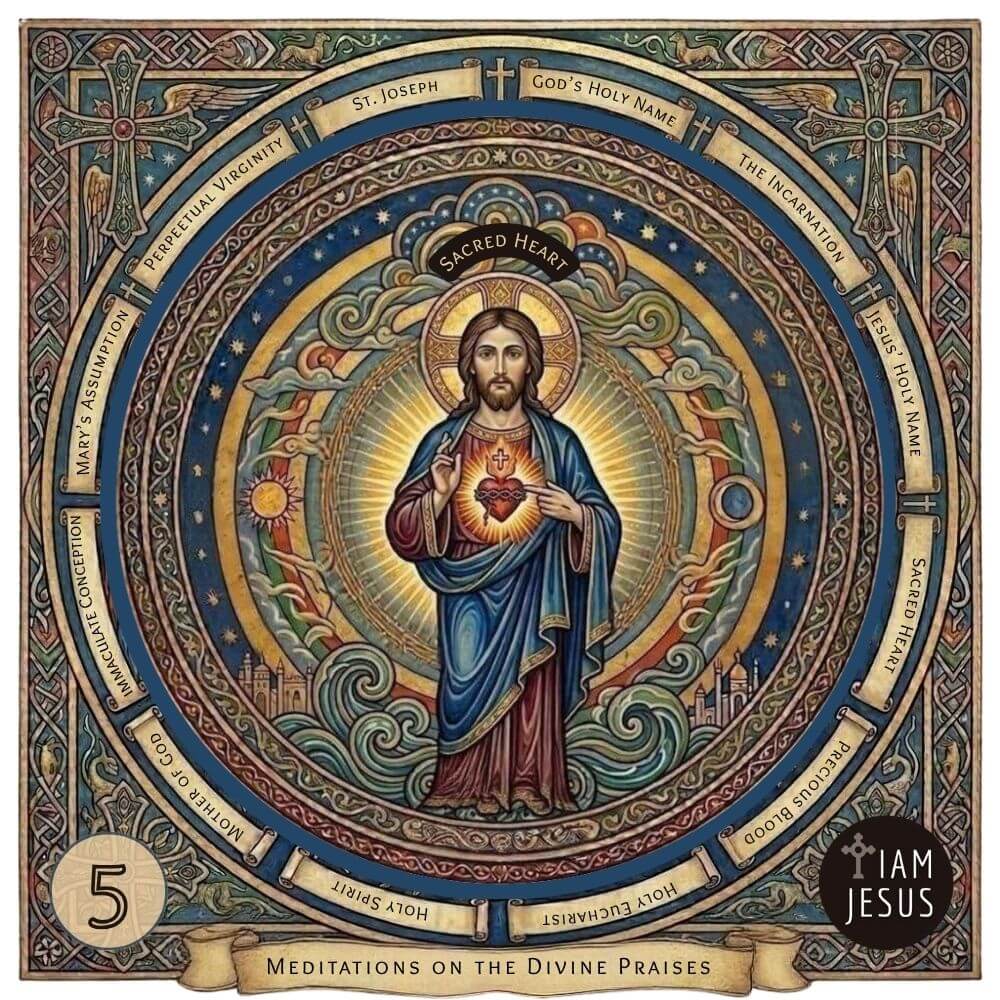
What the Church reminds us here is a beautiful mystery: the infinite God is never distant or detached from us. Even though He is the source of all existence—the One who created everything that ever was or will be—He still chooses to share His name with us so we can be close to Him. He is a God who is intimately present, who hears our cries, and who steps into our lives to break the chains that hold us back. When we pray “Blessed be His Holy Name” in the Divine Praises, we are standing on the exact same holy ground as Moses. We are anchoring our souls in the perfect love of a Creator who knows us completely by name and invites us to truly know His.
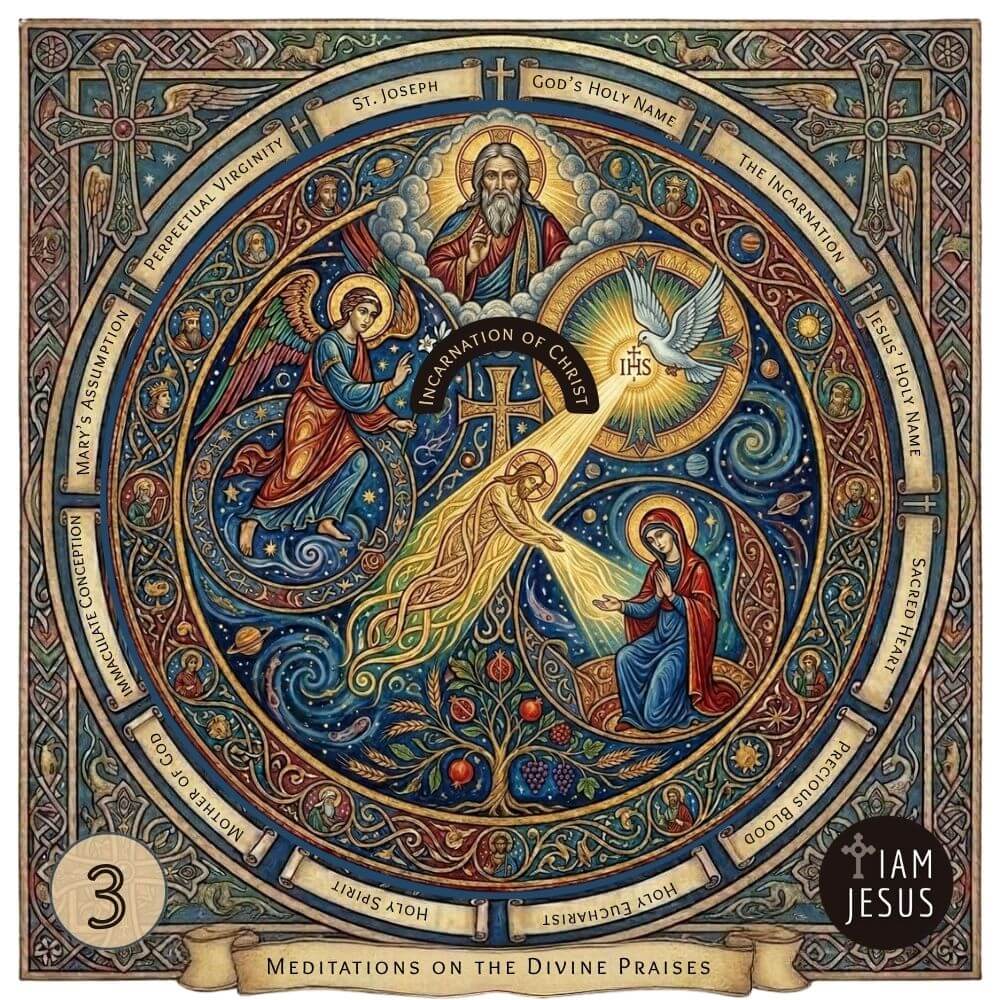
This personal, always-present God who revealed Himself to Moses did not stop there; His desire to be close to us reached its ultimate expression in the New Covenant. The very same “I Am” who spoke from the burning bush stepped directly into our world, taking on human flesh so that we could look upon His face, hear His voice, and experience His love in a tangible way.
Jesus Calls Himself "I Am"
In the Gospel of John, this profound mystery of the divine name reaches its absolute climax. Jesus does not merely speak about God from a distance; He speaks as God, bringing the timeless revelation about the Holy Name of God from the burning bush directly into the salvation story of the New Covenant. During a powerful encounter with the religious leaders of His day, He makes a radical declaration that utterly shocked those listening to Him. Let us listen to His words and unpack what this means for us from both a historical and Catholic context:
Jesus said to them, ‘Very truly, I tell you, before Abraham was, I AM.’ So they picked up stones to throw at him, but Jesus hid himself and went out of the temple.”
John 8:58-59
Jesus does not merely say, “before Abraham was, I existed.” He uses the precise, absolute phrase “I AM.” This is written as “Ego eimi” in the Greek Septuagint translation of Exodus.
By using this specific phrase, Jesus is explicitly claiming to be the very same God who spoke to Moses from the burning bush. He is asserting His own divinity, eternity, and pre-existence. He is telling the crowd that He is the self-existent Creator who is not bound by time.
The reaction of the crowd proves they understood exactly what He meant: under Jewish law, claiming to be God was blasphemy, which carried the penalty of stoning. Jesus’ claim to the Holy Name reveals the beautiful mystery of the Incarnation—that the infinite, eternal “I AM” took on human flesh to dwell among us.
This stunning reality connects intimately to our life of faith today, especially when we sit in the presence of the Blessed Sacrament. The same Jesus who stood before the crowds and declared His eternal divinity is the one who remains with us, hidden but truly present, in the monstrance. When we look at the Eucharist, we are looking at the visible presence of the invisible “I Am.” Our adoration ceases to be a distant remembrance of history and becomes a face-to-face encounter with the living God who continues to sustain our existence out of pure love.
Foreshadowing the Fullness of the "I Am": The Mystery of the Trinity
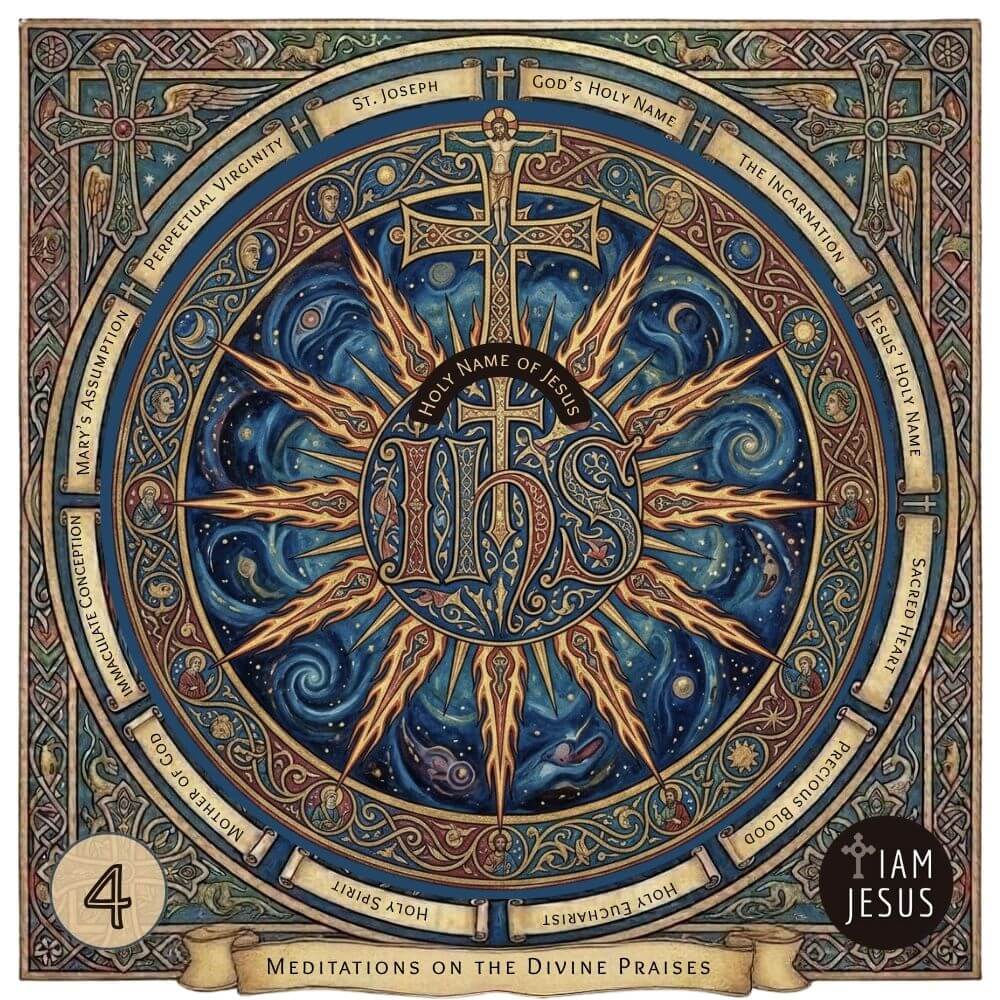
When you pray “Blessed be His Holy Name,” you are directly bridging these two passages. You are praising the eternal God of Moses who is also Jesus Christ. When Jesus proclaims ‘Before Abraham was, I AM,’ He reveals that the Holy Name of God whispered to Moses at the burning bush is the very same Name that brings us salvation in the New Covenant.
As we unpack the theology of the Great “I Am,” we begin to glimpse a beautiful reality that deepens throughout this entire series. In Catholic theology, the eternal “I Am” is not a solitary isolation, but a communion of love—one divine Being in a Trinity of three distinct Persons. When we ponder the holy name of God revealed to Moses, we are standing at the threshold of a mystery that unfolds fully in the New Covenant.
In upcoming meditations, we will explore the Incarnation, where the infinite “I Am” takes on a human heart in Jesus Christ, and the descent of the Holy Spirit, the Paraclete who guides and consoles us. Each line of the Divine Praises gently pulls back the veil on the Godhead, inviting us to move from historical awe into a deeply personal, trinitarian relationship with the Father, the Son, and the Holy Spirit.
Let us Pray:
Now that we understand the catechetical meaning of “Blessed be His Holy Name”, let’s bless the Holy Name of God in prayer.
The 2nd Catechetical Meditation of the Divine Praises prayer
Let Us Bless The Holy Name of God
I praise your Sacred and Holy Name, Lord. I bless you because it is right and just. Your Name is above all other Names in the entire universe. You are the great “I Am” who is absolute and eternal and who is infinitely in love with me. You alone created all things in heaven and on earth and brought me forth out of nothingness and gave me life. In your eternal goodness you bless me and provide for all my spiritual and temporal needs. In my suffering you comfort me. In my need you provide for me. In my ignorance you give me wisdom. When I need guidance you send your Holy Spirit. I bless you with all my heart and offer you adoration and praise in thanksgiving for all you are and all you do. I bless the Lord all my soul and I praise the holy Name of God. AMEN.
In Conclusion: A Call to Revere the Holy Name of God
We pray “Blessed be His Holy Name” not out of mere obligation, but as a tender response of love to the One who loved us first. Every time we repeat these words, we offer a small bouquet of praise to heal a world that often forgets Him. Our blessings become a quiet sanctuary of devotion, gently making amends for the times God’s name is spoken with indifference or disregard.
In moments when the world feels distant from its Creator, we remember the ultimate mercy of Jesus on the Cross, who tenderly prayed, “Father, forgive them, they know not what they do” [Luke 23:34].
Let our daily lives be a living echo of the Divine Praises—carrying His Holy Name in our hearts with deep reverence, sharing His peace with everyone we meet, and resting in the profound joy of belonging to Him.
The Divine Praises in English
Blessed be God. Blessed be His Holy Name. Blessed be Jesus Christ, true God and true Man. Blessed be the Name of Jesus. Blessed be His Most Sacred Heart. Blessed be His Most Precious Blood. Blessed be Jesus in the Most Holy Sacrament of the Altar. Blessed be the Holy Spirit, the Paraclete. Blessed be the great Mother of God, Mary most Holy. Blessed be her Holy and Immaculate Conception. Blessed be her Glorious Assumption. Blessed be the Name of Mary, Virgin and Mother.
Blessed be St. Joseph, her most chaste spouse. Blessed be God in His Angels and in His Saints forever. AMEN.
The Divine Praises in Latin
Benedictus Deus. Benedictum Nomen Sanctum eius. Benedictus Iesus Christus, verus Deus et verus homo. Benedictum Nomen Iesu. Benedictum Cor eius sacratissimum. Benedictus Sanguis eius pretiosissimus. Benedictus Iesus in sanctissimo altaris Sacramento. Benedictus Sanctus Spiritus, Paraclitus. Benedicta excelsa Mater Dei, Maria sanctissima. Benedicta sancta eius et immaculata Conceptio. Benedicta eius gloriosa Assumptio. Benedictum nomen Mariae, Virginis et Matris. Benedictus sanctus Ioseph, eius castissimus Sponsus. Benedictus Deus in Angelis suis, et in Sanctis suis. AMEN.
The Divine Praises Prayer on YouTube
Pondering the Divine Praises: The Complete Series
The Divine Praises Series is a 14-part prayer journey made to help you deeply reflect on each line of this beautiful prayer. Through simple stories, scripture, and heartfelt reflections, this series explores the holiness of God, the Sacred Heart of Jesus, and the special place of the Blessed Virgin Mary. It is the perfect companion for a quiet hour in the adoration chapel or for your daily prayer time at home.