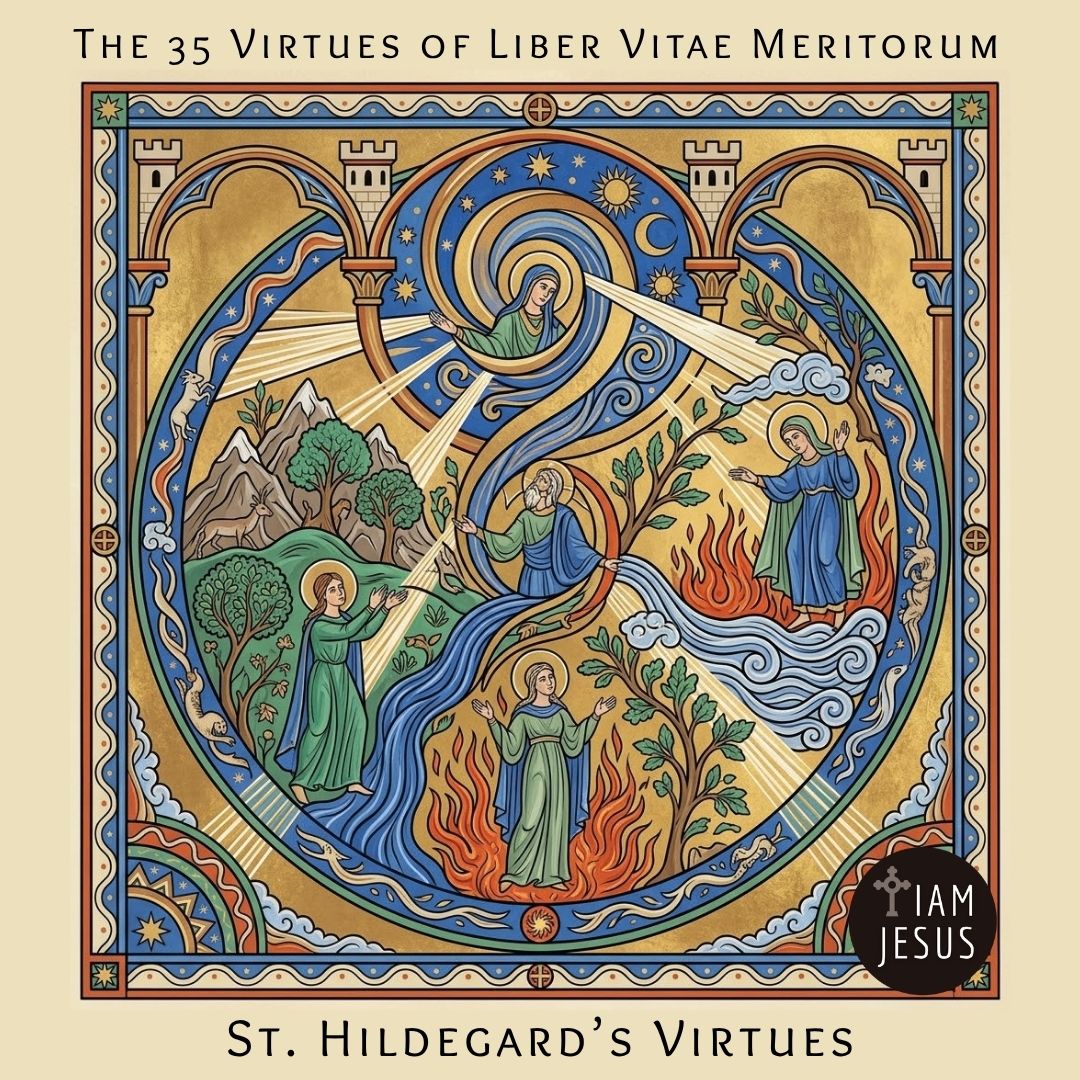
St. Hildegard of Bingen has a word for the sap of God moving through creation and through the soul: viriditas, or greenness. And she has a word for what happens when that sap stops flowing: ariditas — not neutrality, but a real drying-out, a soul going brittle and forgetting how to bear fruit.
This article draws on the scholarship of Dr. Sr. Nameeta Renu, a member of the Order of Consecrated Virgins in the Archdiocese of Bombay who holds a doctorate in spiritual theology built around this very theme. We read this theology alongside the parable of the fig tree in Luke’s Gospel. Here Jesus describes a fig tree, three years without fruit, that the owner wants cut down. But the gardener, who many theologians say is Jesus Himself, asks for one more season to dig, to water, to tend this fig tree that has had a real drying-out.
St. Hildegard shows us in Liber Vitae Meritorum, over and over again, that sometimes what looks green from the outside is quietly dry underneath. Sometimes we are the fig tree, secretly suffering from a real drying-out and wondering if the Lord will give up on us. This is a piece for anyone who feels spiritually thirsty right now. This is a reminder that the Gardener has not walked away, He is still digging around the roots and giving you what you need to quench your thirst once again.
A Doctor of the Church, and a Doctor for Today
I owe this deeper framing to the work of Dr. Sr. Nameeta Renu, OCV, STD, a member of the Order of Consecrated Virgins in the Archdiocese of Bombay, who has spent years with this exact question. She holds a doctorate in spiritual theology built specifically around viriditas in Hildegard’s spirituality — this isn’t a passing interest for her, it’s the ground she has done her deepest work in.
Dr. Sr. Renu writes that when the flow of viriditas is blocked in a soul, that person becomes like “a tree without sap that becomes barren and arid.”
It struck me deeply, because her words show the real mercy of God — and I had recently meditated on the parable of the fig tree, and suddenly I saw what she meant more clearly than I had before.
What I find so pastorally rich in her reading is that she refuses to let viriditas become a simple synonym for “flourishing” in the worldly sense. She’s careful to note that greenness itself can be counterfeit — a weed can look vigorous while having no root deep enough to bear real fruit. Prosperity and vitality are not proof of holiness. Something can look alive and still be, underneath, quietly dying.
The Fig Tree, and the Gardener Who Waits
I could not read her work without thinking of the parable Jesus tells in Luke’s Gospel — the fig tree that has borne no fruit “for three years” (Luke 13:6-9). The owner wants it cut down because it is exhausting the soil. But the gardener asks for one more season: let me dig around it, let me work the soil, let me tend what looks done for before we call it truly dead and dried-out.
He said to him in reply, ‘Sir, leave it for this year also, and I shall cultivate the ground around it and fertilize it…
Luke 13:8
I think this is exactly the moment St. Hildegard is describing when she speaks of ariditas —and exactly the moment Dr. Sr. Renu is naming when she speaks of the sap that has stopped flowing. The fig tree is not condemned for being green and useless. It is barren. It looks, perhaps, like any other tree in the orchard—no obvious wound, no visible rot—and yet nothing is coming from it. That is dryness hiding in plain sight.
And Christ is the gardener who will not yet let it be cut down. He digs. He waters. He gives it time it has not earned. This is what I have come to understand viriditas to mean, in the end, for those of us in the confessional line more often than we’d like to admit: not that we are already flourishing, but that Someone keeps tending the ground around us, refusing to give up on us, and feeding us what we need to help get our sap returning.
If you have felt dry lately —spiritually thirsty, going through the motions without the green rising back up in you —I don’t think that dryness is the final word. The Gardener is still digging.
Going Deeper
This article draws on the scholarship of Dr. Sr. Nameeta Renu, OCV, STD, a member of the Order of Consecrated Virgins in the Archdiocese of Bombay, who holds a doctorate in spiritual theology on viriditas in the spirituality of St. Hildegard of Bingen and writes regularly for Global Sisters Report (a project of the National Catholic Reporter).
Read her original piece: “Why St. Hildegard’s spirituality of ‘viriditas’ is extraordinary” — Global Sisters Report, April 20, 2022.
Explore More from the St. Hildegard Virtue Series
This article is one piece of a larger body of work exploring St. Hildegard of Bingen’s Liber Vitae Meritorum and the theology behind her vision of the virtues. If viriditas and ariditas resonated with you, the pieces below go further into the sources, structure, and imagery that shape the entire series.