Driven by divine voices, a teenage peasant girl rose to lead armies, crown a king, and defy an empire. Discover the radical obedience and fierce courage of Saint Joan of Arc.
Saint Joan of Arc (1412-1431)
On the 30th of May, the Catholic Church celebrates the Feast of Saint Joan of Arc, who is known as the “Maid of Orléans” and is an heroic patroness of France. Her life is an amazing testimony in Christian history and her mystical experiences with God drove a narrative of how radical obedience to divine providence can change the course of a nation.
Joan was born in 1412, during the time of the infamous Hundred Years’ War, to a pious peasant family in a small village called Domrémy, located in northeastern France called Domrémy. It is now known as Domrémy-la-Pucelle. From an early age, her mother instilled in her a deep devotion to the Catholic faith, particularly the sacraments of Penance and Holy Eucharist.

Divine Voices and the Catholic Call to Virtue
When Joan was about thirteen years old, she began hearing the voices of Saint Michael the Archangel, Saint Catherine of Alexandria, and Saint Margaret of Antioch. The body of writings that documented her life, deeds, miracles, and martyrdom shows us how these specific saints were deeply symbolic. Saint Michael represented the spiritual warfare she would encounter. Saints Catherine and Margaret were virgin martyrs who had successfully debated pagan philosophers and resisted oppressive rulers, foreshadowing Joan’s own future trials.
Initially, these heavenly messengers instructed her to be a good child and attend Mass frequently. However, by 1428, the command became explicitly political and military: she was to leave her village, lift the siege of Orléans, and lead the Dauphin (the future King Charles VII) to his coronation at Reims.
Armor, Chivalry, and the Banner of Christ
Overcoming immense human opposition, the young mystic convinced local commanders of her divine mission. Before taking the field, Catholic tradition records that Joan was directed by her voices to a miraculous discovery: a hidden sword buried behind the altar of the Church of Saint Catherine of Fierbois, marked with five crosses.
As a military commander, Joan’s primary weapon was not the sword, but her famous white banner. Painted with an image of God the Father holding the world, flanked by angels, it bore the holy names of “JESUS, MARIA.” Joan brought a profound spiritual reform to the French military camp. She banned swearing, required her soldiers to confess their sins, expelled camp followers, and insisted that the army attend Mass regularly. Her leadership was defined by a complete trust in God’s sovereignty. Under her inspired guidance, the strategic city of Orléans was miraculously liberated in May 1429, followed by a swift campaign that allowed Charles VII to be validly anointed and crowned at Reims—with Joan standing proudly by his side with her banner, asserting that those who shared in the hardship should share in the glory.
The Agony of the Trial: Defending the Faith
Joan’s earthly triumphs were short-lived. Captured by the Burgundians in May 1430 at Compiègne, she was abandoned by the king she had crowned and sold to the English. Her trial in Rouen was a orchestrated political sham masked as an ecclesiastical tribunal. Presided over by the corrupt Bishop Pierre Cauchon of Beauvais—who sought favor and advancement from the English crown—the trial attempted to link her divine inspirations to witchcraft and heresy.
Despite being illiterate, isolated, and denied a legal advisor, Joan defended her faith and her voices with a brilliant, divinely inspired wisdom that baffled her hostile interrogators. When the deceptive theologians tried to trap her by asking if she knew she was in God’s grace (a theological trap, as church doctrine states no one can be absolutely certain of their state of grace, yet denying it would imply guilt), Joan famously replied:
“If I am not, may God put me there; and if I am, may God so keep me. I should be the saddest creature in the world if I knew I were not in His grace.”
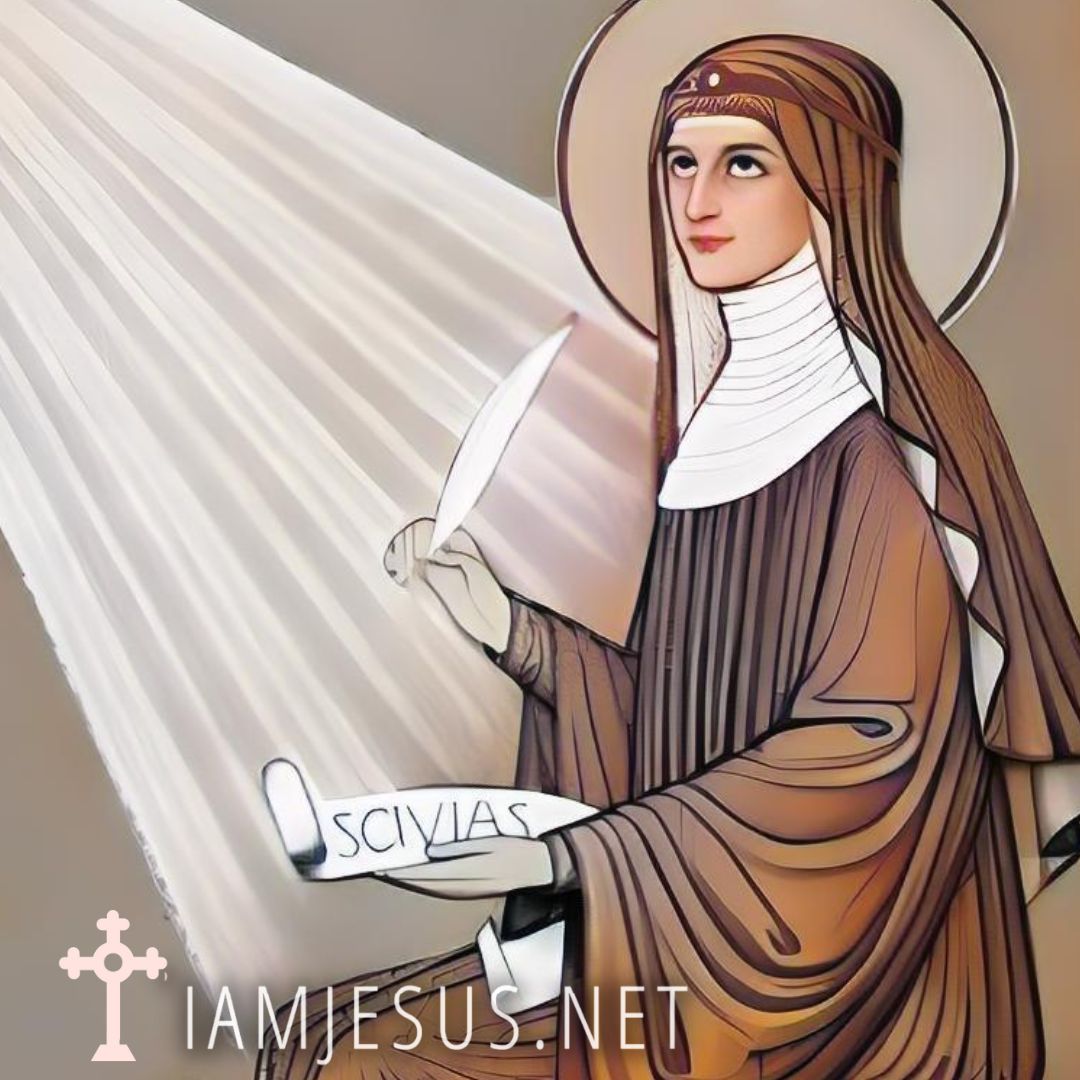
St. Joan of Arc
St. Joan of Arc: Martyrdom and Glorification
In 1431, St. Joan of Arc was condemned as a heretic by a very politically motivated tribunal. The judges were aligned with both the English and Burgundians. They used heresy charges to discredit Joan’s visions and to invalidate French King Charles VII’s claim to the throne. They also accused her for refusing to renounce her male military attire. Joan did this to protect her virginity and modesty while on the battlefield and in prison, however the tribunal twisted it into a violation of Deuteronomy, labeling it an abomination and a sign of heresy.
Under intense pressure, Joan was coerced to sign a document renouncing her visions and agreeing to wear women’s clothing. Days later, she recanted, saying her saints had rebuked her for signing it, and Joan began wearing men’s clothes again. This was all the judges needed to declare her a “relapsed heretic,” which was an offense that carried a mandatory death penalty. Joan was sentenced to death.
The Feast of Saint Joan of Arc: May 30
The Feast of Saint Joan of Arc: On May 30, 1431, at just nineteen years of age, Joan was led to the Old Marketplace in Rouen to be burned at the stake. She requested a Dominican friar to hold a crucifix high before her eyes so that she could see it through the flames, and she loudly invoked the name of Jesus until her final breath.
Joan of Arc died of smoke inhalation before the fire could consume her body, after which English authorities burned her remains two more times to prevent the collection of relics. Her ashes were reportedly scattered in the Seine, and no skeletal remains survive. Her personal brass ring remains the most notable verified relic, according to the Church.
Legacy: From Rehabilitation to Altars
Saint Joan of Arc’s corrupt political trial was eventually overturned twenty-five years later when Pope Callixtus III opened a regular Court of Appeal to investigate the trial. In 1456, this papal Nullification Trial completely exonerated Joan, declaring her original trial riddled with fraud, malice, and error, formally restoring her good name.
Centuries later, on May 16, 1920, Pope Benedict XV officially canonized Saint Joan of Arc and set the Feast of Saint Joan of Arc for May 30 of every year. He praised her not merely as a national patriot, but as a virgin saint who perfectly harmonized love of country with an absolute, uncompromising love for God and His Church.
Today, Saint Joan of Arc stands as the patroness of France, soldiers, and captives. She is an inspiration for all Christians who are ridiculed for their piety. In an age where the truth of faith is often compromised or diluted, we can look to Saint Joan’s fierce courage and unyielding fidelity to the divine will of God.
Saint Joan of Arc, pray for us, that we may have the strength to stand firm in our Catholic Faith against all heresies and errors. We ask all this in the name of the Father, and of the Son, and of the Holy Spirit. AMEN.
St Joan of Arc’s Feast Day is the 30th of May. She is the Patron Saint of soldiers, prisoners, captives, and women in the military.
Learn about her life and works here.